
How Many Bags of Cement Do You Need for a 3-Bedroom House?
Estimate cement bags needed for a 3-bedroom house in Kenya — foundation, walling, plastering and slab, with a full breakdown table.
By Safeworld Technical Desk
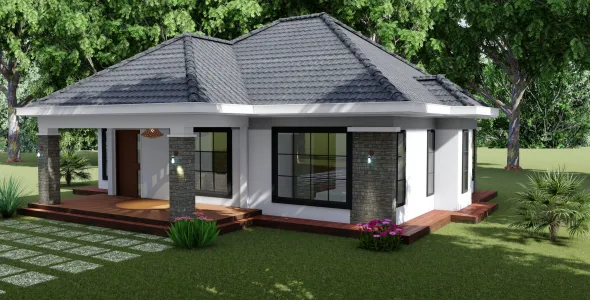
One of the most common questions we get from homeowners and even first-time contractors is simple: how many bags of cement does a 3-bedroom house actually need? The honest answer is "it depends" — on design, finishes, and whether you're building single or double storey — but here's a realistic breakdown you can use to budget and order with confidence.
Quick estimate: 3-bedroom bungalow (single storey)
For a typical 3-bedroom bungalow of roughly 100–130 m² built-up area on a standard foundation, expect a total cement requirement somewhere in this range:
| Stage | Approx. bags (50kg) |
|---|---|
| Foundation & footings | 150 – 200 |
| Substructure walling (up to DPC) | 60 – 90 |
| Ground floor slab | 120 – 160 |
| Superstructure walling (blockwork) | 150 – 200 |
| Plastering (internal + external) | 180 – 240 |
| Floor screeding | 60 – 80 |
| Total (approximate) | 720 – 970 bags |
These figures assume standard block sizes, conventional strip foundations, and typical Kenyan residential specifications. Actual requirements vary with wall thickness, foundation depth, and finish quality — always confirm against your structural drawings and Bill of Quantities where available.
Why the range is so wide
A few factors shift these numbers significantly from one house to the next:
- Foundation type and soil condition — poor soil bearing capacity means deeper or wider footings, which uses more cement
- Wall thickness — 6-inch vs 9-inch block walls change blockwork and plastering quantities
- Number of finishes — tiled vs screeded floors, rendered vs unrendered external walls
- Slab type — a suspended slab (for a storeyed extension later) uses considerably more cement than a simple ground-bearing slab
- Design complexity — more internal walls, verandas, and boundary features all add to the total
Bagged vs bulk — which makes sense for a 3-bedroom build?
At roughly 700–1,000 bags total, you're in the range where mixing bagged and bulk delivery often makes the most sense:
- Bulk tanker delivery for the foundation and slab stages, where large volumes are poured in a short window and site access allows tanker delivery
- Bagged cement for blockwork, plastering, and finishing stages, where cement is used more gradually over weeks and stored on-site as needed
This approach reduces cost on the big-volume stages while keeping flexibility for the phased, slower-paced finishing work.
Double-storey 3-bedroom house?
If your 3-bedroom design is double storey rather than a bungalow, expect total cement requirement to rise by roughly 40–60% above the bungalow figures above, mainly driven by the suspended first-floor slab, additional columns and beams, and the extra walling and plastering area on the upper level. A qualified structural engineer's BOQ is strongly recommended before ordering at this scale — the added structural load means grade specification (32.5 vs 42.5) also matters more.
Get an accurate estimate for your specific plan
These figures are a planning guide, not a substitute for a proper Bill of Quantities. If you have architectural or structural drawings, our technical desk can review them and give you a stage-by-stage cement quantity and delivery plan — bagged, bulk, or a mix of both — matched to your actual build schedule.
- WhatsApp or call — 0796 177 284
- Share your house plan or BOQ if you have one
- We calculate quantities by stage and recommend bagged vs bulk
- Get a phased delivery plan matched to your build timeline
Get a cement quantity estimate for your build →
Figures are indicative estimates for planning purposes only. Always confirm quantities against your structural engineer's specification and Bill of Quantities.
Ready to order? Get the best bulk cement prices in Kenya.
Get a Quote